


I was in New York when Gone Girl (novel) was published. It was an immediate hit. A friend read it and recommended it. I asked what it was about and she said that a man’s wife goes missing and he’s the prime suspect, and then there’s a twist. I said, “Oh, she’s alive and is framing him?” (or something like that). My friend said yes, but that I should still read it. She was right.
I was hooked, even if I knew about that twist, because there was so much more going on, character-wise. And the plot kept on going to unexpected places, and whatever I thought the ending would be, it wasn’t what it is. The different voices (real or fake) are distinctive and developed.
And when the adaptation came out…The casting doesn’t get better than that, does it? And the story and character development are as gripping as they are in the novel.
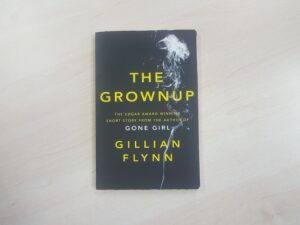
As usually happens when I love (or become obsessed with) a novel (or movie or album) by an artist, I get everything else I can from them. And Gillian Flynn wasn’t going to be the exception. So I bought Dark Places and Sharp Objects, and I’ve recently gotten The Grownup.
Both the novels and the short story are absorbing and scary, if for different reasons, although they all (including Gone Girl) have something in common: complicated characters who are burdened by their pasts and who are trying to figure out a thing or two.
As the mysteries develop, so do the characters and it becomes clearer how they got to where they are, why they act the way they do, and why they make the decisions they make moving forward.
One of the mysteries, I had no idea how it’d be resolved, and for the others, I had a general answer but it was a twisted version of it, so I was still surprised.
I know that all of this sounds really vague, but even if the books (and their movie and TV adaptations) are all more than a handful of years old, I really don’t want to spoil anything.
If you want to better understand what I’m trying to say about Gillian Flynn, read The Grownup. It’s a short story that, in 64 pages, manages to set a very clear tone and introduce distinctive characters; you think you know what’s going on but then you don’t. And then you doubt what you started to doubt, until you’re no longer sure of anything, and the story ends. While the novels obviously have more character development and more complex mysteries, the immersiveness is the same.
My point is, I’m impatiently waiting for her future productions, whatever they may be.


